
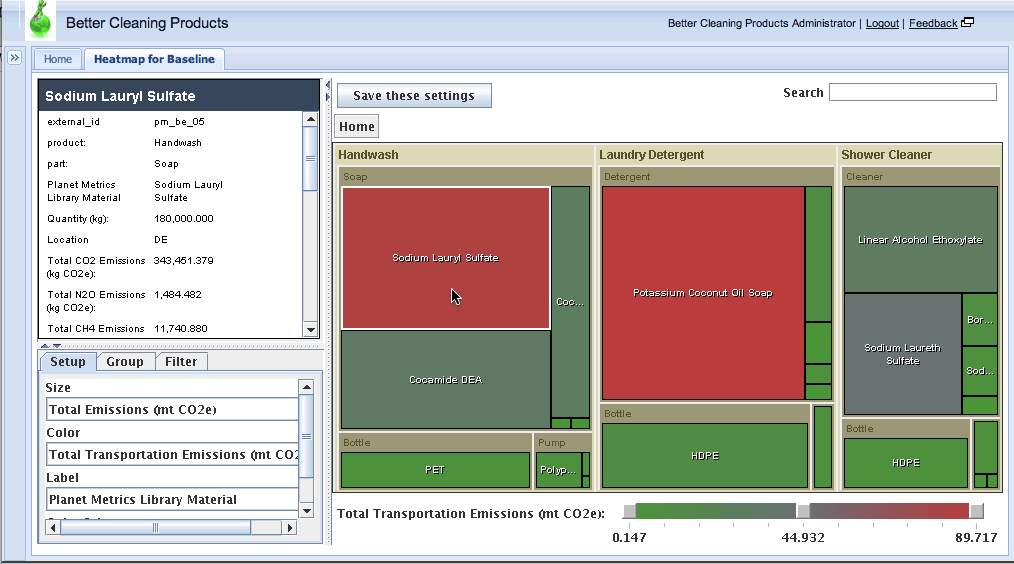
(Heatmap screen of new RCM software)
new Rapid Carbon Modeling (RCM) technology SaaS Solution sounds like a valuable resource for a wide spectrum of companies and industries. We took some time to connect with Andy Leventhal, founder and CEO of Planet Metrics, to learn a bit more about this exciting news.
COD: seems like it is being introduced to the market at a perfect time. Can you give us an idea of who you expect to use this tool and what the value proposition is for your customers?
Andy: In a very short period of time, focus on Sustainability has moved from a peripheral program to a necessary strategy. In fact, the rising price of oil, emerging local and federal governmental carbon regulations, and consumer preference for sustainable products have influenced executives to develop and articulate Sustainability Strategies—and associated metrics—to stakeholders and customers. Sustainability, operations, product management, and supply chain executives need solutions to create and implement these strategies, and respond to the challenge of integrating sustainability requirements into their daily decision making. Our belief is that they need to combine the environmental and business impact of changes and redesign at all points along their value chain, i.e. raw materials, product design, packaging, logistics and waste streams, to be most effective. This notion of ’systems thinking’ isn’t new but hasn’t been introduced in software or in a business intelligence framework. Planet Metrics RCM transforms carbon information into Business Intelligence for executives who need to prioritize and measure the environmental impact of business decisions.
COD: In the recent Planet Metrics announcement of RCM, we learned the solution can be deployed in less than 30 days. Sometimes even faster, such as with . Can you give us a picture of how integration works and what it takes to get up to speed?
Andy: Getting started with us is pretty simple. Our team determines the key questions that the customer needs to answer. For example, “what is the carbon footprint of my product(s) when I change my petroleum based packaging material to a recycled material which yields a 5% smaller cube? Or, what is the impact for them if they change 3 suppliers of 3 different products from 3 different locations? There are transportation, fuel, energy intensity, cost, quality and even potential performance issues that all go into that scenario. So understanding these questions are necessary so we know which models are most important and to which parts of the company. Our scientists undergo a collaborative exercise with the client to create these models that draw upon our huge carbon data warehouse as well as lots of customer data. This can happen in as little as a week or a few months depending how many products we are looking at, how many materials are included in these products and if the data is readily available. Fortunately, when data isn’t available, we can use our own data as a proxy until the customer data can be used.
Planet Metrics works with customers to help organize primary data and combine it with scientific, peer-reviewed data to get a complete and comprehensive understanding of the whole value chain – measuring emissions from cradle to grave. By organizing the full value chain data set, providing scientific analysis, identifying and visually presenting the carbon intense “hot spots,” Planet Metrics provides a unique breakdown of a whole carbon footprint, allowing organizations to drill down on the extreme carbon emissions categories to begin making changes. Often times, there are sound short- and long-term decisions, which will dramatically reduce emissions, and ultimately save the company money. Organizations can then look to bolster internal benchmarking, strategy development, innovation targeting, and communication of performance to internal and external stakeholders.
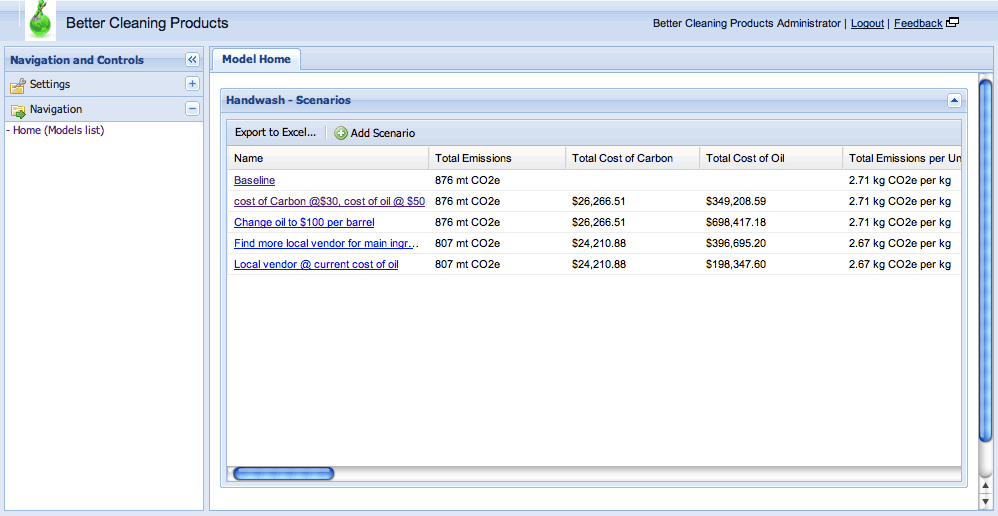
(Scenario results screen of new RCM software)
COD: What is the source of the science that RCM relies on, such as the LCA (life cycle analysis) and GHG (greenhouse gas) Inventory data?
Andy: Fundamentally, this new environmental information that companies require comes in two forms: information that they have easy internal access to and external, up- or downstream information that is commonly more difficult to obtain. We combine a company’s available internal information, such as GHG inventory data, product LCA data, bills of materials, energy and fuel use, and sales data with an array of external environmental databases and materials libraries. Models are built to combine this internal and external information into a comprehensive overview of the carbon emissions associated with purchasing, logistics, operations, and sales for the business. We have compiled an extensive library of scientific databases from publicly and commercially available sources, such as the US government, academic publications, European LCA initiatives such as EcoInvent, and so on. The data is all peer reviewed, referenced, and represents the best available information in the world about the carbon impacts of materials, processes, and activities. We are one of the only commercial licensees of the 2002 EIO-LCA data model developed by Carnegie Mellon University, which is based on the most current and detailed input/output data available and was only released this year by the US Government. Using these data sources, along with other academic, scientific, or industry-specific studies, we’re able to pull from a world-class database of carbon data to fill all information gaps in the customer’s carbon models.
COD: RCM requires both time and financial investment by companies. Any idea on the expect ROI?
Andy: We don’t yet have specific ROI data, but across the industry, we are starting to see real savings on some initiatives that began years ago. Take a look at fuel reduction. In Andrew Winston’s book to be published next month, he notes that Wal-mart wanted to improve the efficiency of its private fleet by 25%; they blew past the 25% goal and now others are reaching goals of 40% savings in fuel alone, including FedEx, Coca Cola, Safeway, and others. That’s just fuel savings. If you look at waste reduction and recycling, Burt’s Bees has set a goal of zero waste by 2020. Already, in only two years, the company has reduced waste by 29 tons per month, saving an estimated $50,000. But, this doesn’t happen overnight. Planet Metrics RCM gives customers the ability to view the data across the whole value chain getting the understanding of many aspects of their business from fuel output, raw materials used, waste, and other inefficiencies. We helped Method evaluate new packaging materials vs. old, which included ingredients of all kinds. We found a 71% reduction in embodied energy in their new packaging. That’s huge by any standard but it could take some time for them to roll out. There are lots of examples like this, but not all have an obvious and immediate financial ROI until innovations are implemented. Planet Metrics’ sells “clarity” to help these executives become aware and understand the ‘hot spots’ to start making changes.
COD: Once a company has used RCM to reduce their carbon footprint through efficiency gains, what’s their next step? How do you recommend companies manage the remaining climate-damaging emissions generated by their operations?
Andy: As stated above, I think once these companies have seen what they are emitting and what they are spending across the whole supply chain, they can begin to prioritize where they focus, develop appropriate metrics and communicate these changes in packaging, shipping, product manufacturing, waste, and more to all the stakeholders. There is no ‘finish line’ when becoming more sustainable. It’s an ongoing process of finding waste and seeking innovation potential. I also think that communicating progress and stating goals is essential. The leaders in sustainable innovation will get there through re-inventing themselves with carbon reduction as a core theme. I’ll bet they capture customer mind share and save money at the same time!
COD: What place do you think carbon offsets have as a tool for companies in addressing their carbon footprint?
Andy: Without offsets, a company can’t ever be carbon neutral, a goal many companies are shooting for at some point in the future. That’s simply because every company has to consume some energy, which of course, creates pollution. Planet Metrics helps companies measure as much of their business as possible so they understand where the main carbon contributors exist. Companies should take the necessary steps to reduce first and offset what they can’t eliminate.
To learn more visit the PlanetMetrics.com
{ 2 trackbacks }
{ 0 comments… add one now }